
Not every vehicle needs paint correction before ceramic coating, and vehicle age alone doesn’t determine the answer one way or the other. Ceramic coating is a transparent, protective layer — it bonds to whatever condition the paint is already in at the time of application. Swirl marks, light scratches, and oxidation that exist before coating remain just as visible afterward, sometimes more so under the added gloss. Whether correction makes sense for your vehicle depends on its actual paint condition, not its age or how it looks from a few feet away in a driveway.
What Ceramic Coating Actually Does — and Doesn’t Do
Ceramic coating is a liquid polymer that hardens over the surface it’s applied to, creating hydrophobic behavior and added gloss. It’s a protective treatment, not a corrective one — this distinction matters more than most first-time customers realize going into the process. LI Car Guys’ own coating packages, using Artdeshine products, each include washing and prepping before application — but that baseline prep step is different in scope from a dedicated correction process aimed specifically at reducing existing paint defects like swirl marks, scratches, or oxidation.
Why “New” Doesn’t Automatically Mean “Defect-Free”
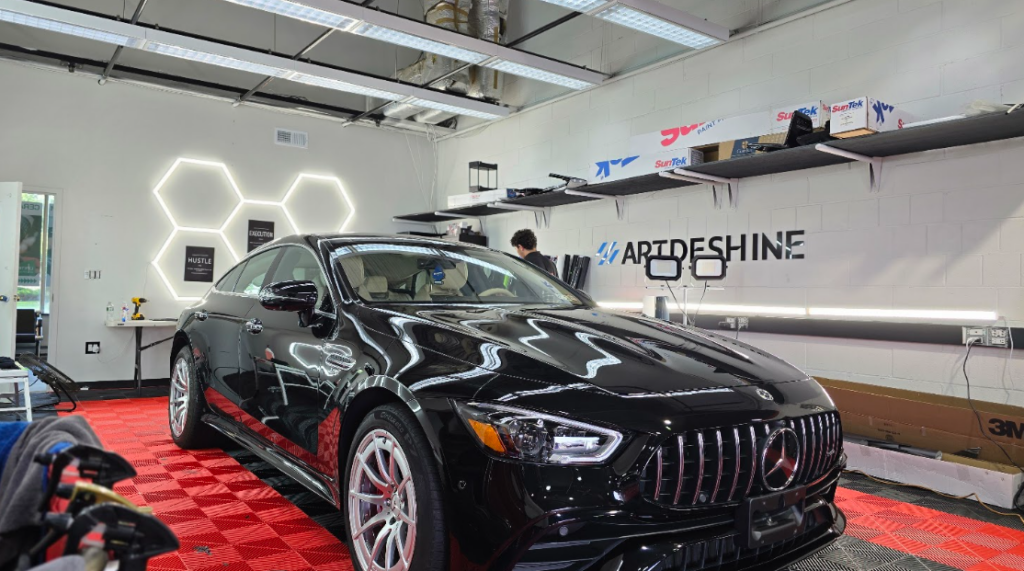
A brand-new vehicle can still carry swirl marks from dealership prep, transport handling, or an early wash with the wrong technique — sometimes before it’s ever reached its first real owner. Manufacturing and delivery handling both introduce real opportunities for minor surface marring that has nothing to do with how careful an eventual buyer is with the vehicle. That doesn’t mean every new vehicle needs aggressive correction; it means an actual inspection matters more than assuming a vehicle’s age tells you anything reliable about its paint condition, since delivery mileage and calendar age are poor substitutes for a direct look at the surface itself.
Why Coating Preserves Defects Rather Than Hiding Them
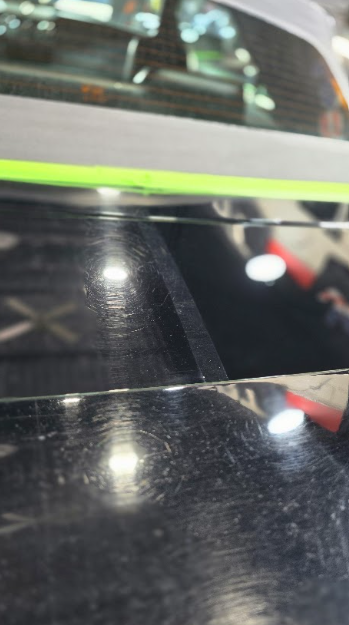
This is the point most first-time coating customers misunderstand: coating doesn’t fill in or level out surface irregularities the way a machine polish does. It cures as a thin, transparent layer over whatever texture already exists on the surface beneath it. A swirl mark under a coated surface is still a swirl mark — sometimes it reads as more visible once the surrounding paint gains extra gloss and reflects light more evenly, since the added shine can actually draw more attention to inconsistencies in the surface rather than masking them.
The Decision Process: Correction, Light Enhancement, or Neither
These are general starting points based on real, common paint conditions, not a fixed prescription for every vehicle:
| Paint Condition | Reasonable Next Step | Why |
|---|---|---|
| Genuinely clean, minimal visible marks | Coating without extensive correction | Preparation and decontamination alone may be sufficient |
| Light swirling from wash-induced marring | Light polish/enhancement before coating | Addresses surface-level marks without full correction |
| Moderate-to-heavy swirls, visible scratching | Dedicated paint correction | A single light pass generally won’t resolve deeper defects |
| Visible oxidation | Correction evaluation | Oxidation often needs targeted attention before coating locks in the result |
These are general starting points, not a fixed prescription — the right call depends on an actual in-person inspection of your specific vehicle.
How Preparation Affects the Final Result
Coating applied over a properly prepared surface tends to look meaningfully glossier and clearer than coating applied over a surface with unaddressed contamination or defects, since the coating’s own optical clarity depends partly on what’s underneath it. This is part of why LI Car Guys’ own coating packages build washing and prep into every tier rather than treating it as a separate line item — a clean, properly bonded surface is foundational to how the finished result looks and performs.
Beyond the visual result, there’s a practical bonding consideration too. Ceramic coatings are designed to chemically bond to a clean painted surface — contamination, old wax, or sealant residue sitting between the paint and the coating can interfere with that bond, potentially affecting how evenly the coating cures or how long it performs as expected. This is a large part of why decontamination and prep aren’t treated as optional steps by reputable installers, regardless of which specific coating brand or tier is involved.
Vehicle Age and Ownership History Matter More Than the Odometer
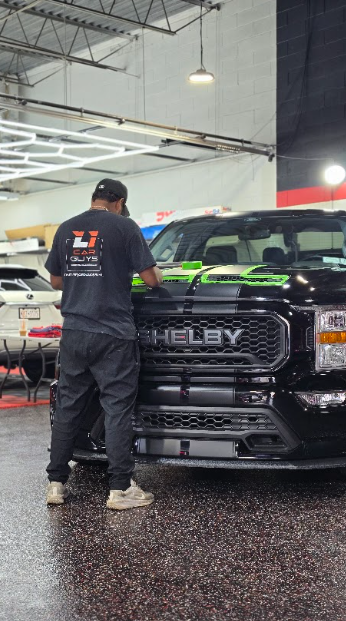
It’s worth being specific about why “new car” and “no correction needed” aren’t the same statement. A vehicle can be new in terms of registration date while having already accumulated real handling wear — from the manufacturing plant, from transport across multiple carriers, from dealership prep washes performed with automated equipment, and from test drives before it ever reached its eventual owner. None of these steps are inherently careless, but cumulatively they can leave a genuinely new vehicle with more surface marring than its age alone would suggest.
Conversely, a used vehicle with several years of ownership under a careful, hand-washing-only owner may genuinely have less accumulated surface wear than a one-year-old vehicle that’s already been through a dozen automatic car washes. This is exactly why an actual inspection — checking the paint under proper lighting, feeling for surface texture, and evaluating gloss and clarity directly — provides more reliable information than any assumption based on the vehicle’s registration date.
A Practical Way to Approach the Conversation
When discussing ceramic coating with an installer, it’s reasonable to ask directly whether they inspect paint condition before finalizing a recommendation, rather than quoting a coating tier based solely on vehicle size or type. A response that genuinely acknowledges paint condition as a real variable — rather than treating every vehicle identically regardless of its actual surface condition — is generally a good sign that the correction-versus-coating distinction is being taken seriously rather than skipped over in the interest of a faster sale.
Thinking About Correction Level Versus Desired Outcome
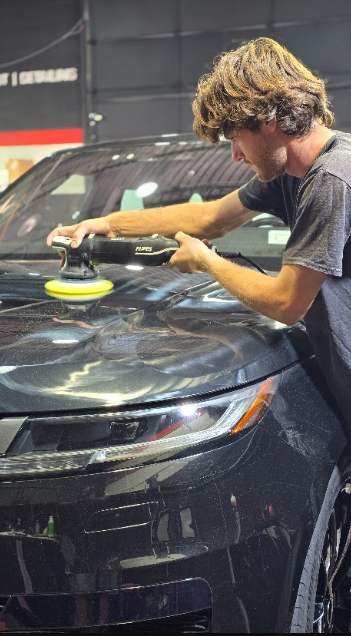
An owner mainly interested in protection and easier maintenance going forward may reasonably choose a lighter preparation step if the paint’s condition genuinely supports it. An owner who wants the deepest possible gloss and clarity, or who’s bothered by visible swirling under direct light, is a better candidate for a fuller correction pass before committing to any of the three Artdeshine coating tiers. Neither approach is wrong — they reflect different priorities, and being honest about which one actually matters to you helps avoid paying for correction work that doesn’t meaningfully change what you’ll notice day to day.
It’s also worth thinking about how you plan to use the vehicle afterward. A daily driver that will keep accumulating minor wear from regular use doesn’t necessarily justify the same level of correction investment as a vehicle an owner intends to keep in near-showroom condition for years. Coating protects whatever state the paint is in at application — it doesn’t freeze that condition in a way that makes future correction unnecessary if new wear accumulates later.
What “Preparation” Actually Involves Before Coating
The washing and prep stage built into every Artdeshine tier generally exists to remove surface contamination — light dust, residue, and other material sitting on top of the paint — so the coating bonds directly to the paint itself rather than to a layer of contamination between the two surfaces. This is different from correction work, which addresses what’s happening within the clear coat itself, like fine scratches or oxidation embedded in the surface rather than sitting on top of it. Both steps matter, but they solve different problems, and neither substitutes for the other.
A useful way to think about it: prep answers the question “is the surface clean enough to bond properly?” Correction answers the much more specific question “does the surface itself have defects genuinely worth addressing before that bond happens?” A vehicle can pass the first question easily while still needing real attention on the second, which is exactly the scenario this article is built around.
Long Island Ownership Considerations Worth Factoring In
Long Island’s mix of coastal exposure, road salt during winter months, and a genuinely significant amount of daily highway driving all contribute to how quickly a vehicle’s paint accumulates the kind of wear that eventually shows up as swirling, light scratching, or dulled clarity. None of this means every Long Island vehicle needs aggressive correction — it means that a vehicle’s actual driving and storage history matters more here than a generic assumption based on the calendar year on the title. A commuter vehicle that’s spent several winters navigating salted roads and been through repeated automatic washes has a meaningfully different paint history than a similarly aged vehicle that’s spent most of its life garaged and hand-washed.
This is part of why an in-person evaluation matters more than trying to diagnose paint condition from a description over the phone. Two vehicles of the same year, make, and model can arrive with genuinely different correction needs based entirely on how they were actually driven, parked, and maintained up to that point.
Questions Worth Asking Before Booking
Before committing to a specific coating tier, it’s reasonable to ask whether an inspection will genuinely happen before a final recommendation, what that inspection is actually looking for, and whether the quoted preparation step is expected to be sufficient for your vehicle’s specific condition or whether additional correction work is likely to come up once the paint is properly assessed in person. Getting clarity on this upfront tends to prevent the frustrating situation of a quote changing significantly once a vehicle is actually inspected in person.
PPF and Coating Solve Different Problems
It’s worth briefly noting that PPF and ceramic coating aren’t interchangeable — PPF is a physical film offering genuine impact protection on specific panels, while coating is a surface treatment focused primarily on gloss and easier maintenance rather than physical impact resistance. Some owners use both in combination, applying coating on top of installed film for the easier-cleaning benefit across the whole vehicle. That decision is separate from the correction question this article focuses on, though it’s worth knowing the two services exist for genuinely different reasons rather than as competing options for the same problem.
For a full explanation of how correction itself works — the tools, stages, and process involved — see how paint correction actually works.
FAQs
Do you always need paint correction before ceramic coating? Not always. It depends on the vehicle’s actual paint condition — some vehicles need only the standard washing and prep step already built into LI Car Guys’ coating packages, while others benefit from a dedicated correction pass first.
Does ceramic coating hide swirl marks? No. Coating is a thin, transparent layer that cures over whatever surface condition already exists. It doesn’t fill in or level out swirl marks the way a polish does.
Can ceramic coating remove scratches? No. Coating protects the surface it’s applied to; it doesn’t correct or repair what’s underneath. Reducing visible scratches is the job of paint correction.
Does a new car need paint correction? Not automatically. New vehicles can have minor defects from delivery handling, but many arrive in genuinely clean condition. An actual inspection is more reliable than assuming based on age alone.
What happens if coating is applied over existing defects? The coating cures over whatever condition the paint is in. Existing swirl marks or scratches remain visible, and can appear more noticeable under the coating’s added gloss.
Is paint correction the same as the prep included in a coating package? Not necessarily — LI Car Guys’ coating tiers include washing and paint enhancement before application, which is different in scope from a dedicated correction process for more significant defects. [DMI VERIFY BUSINESS FACT]
Should I get a lighter or more thorough correction before coating? It depends on your paint’s actual condition and your own priorities — how much gloss and clarity you want versus how much existing wear genuinely bothers you.